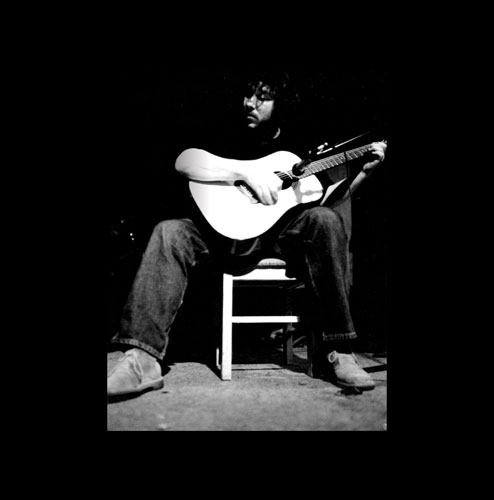
You know, I wish this light was all light, that it would follow only us.

Saturday, April 10, 2010

On two British movies.


The Thirty-Nine Steps-Alfred Hitchcock, dir. (U.K. 1935)

The career artist loses some of the austerity that makes him great when he's young. As an old artist he relaxes. In relaxing the fineness of the fire is bargained away.

Young Hitchcock. He made superb, thoughtful movies nearly all his working life. But the British movies from the thirties are such confidently composed things that they exceed even the halcyon of his late 50's work. They reflect a time and place as impossibly distant as it is concrete, reflective--one even more impossibly distant than England in the 30's. That it was Illuminated by Bernard Knowles' tarnished photography (the silversmith responsible for the insidious 'Gaslight') gives Hitchcock's between-the-wars England a special air of austere and harsh beauty.

There is an appealing force to Robert Donat's performance, one Hitchcock would mine in leading men in later ventures, rarely with such capital success--though Michael Redgrave in The Lady Vanishes, in 1938, competes. Donat is Hannay, the common man with a stuttering desire to remain hidden in the world, an embarrassed, fearful post-Victorian shadow of manners and propriety. In his circumstances he must transgress manner and break propriety to save his own skin. See him throw himself at a beautiful female train passenger, not out of amorous impulse, but to avoid being nabbed by pursuant policemen. He happens into a political rally where his stoicism and expressive modesty must take a back seat while he whips the crowd into a froth to find subterfuge in their ensuing calamity. It's as if Hitchcock anticipated Frank Capra's expanding social agenda--Mr. Deeds Goes to Washington would follow The Thirty Nine Steps in 1938, and provided paranoid point to its rabble-rousing American counterpoint.

In the former's case it is the angry little guy causing a stir in the big room just to get back to his unexamined comfort zone--measuring a man as combatant of all forces barring his way to the quietude. Capra's everyman, on the other hand, is making his noise specifically to get to that big room, he uses the noise, yes, but he loves the noise! Hitchcock's England was still spooked by the the Great War, breathing the continental portent of the war to come--his idea of human explosion came with justified nausea. Capra, salving the Depression-era America, took a decidedly different tack.

The lewd commuters on Hitchcock's train--is it possible that the train even edges out pristine Grace Kelly as the most reliable of Hitchcock's cinematic foils?; the bored, trusting Scottish farmer's wife, and the harsh farmer ("God made the country!"), are snap characters, simple enough to have been ink-drawn in a single line each, compelled by a warmth nearly impossibly demanding for such brief encounters. Anyhow, there they are in Hannay's abrupt English adventure.

Take the doddering emcee who introduces Mr. Memory, the vessel of the 39 steps secret, to a rowdy theater crowd. Introducing the performer whose ability it is to recall from memory any trivial bit of information on request, he remarks, "I also add, ladies and gentlemen, that Mr. Memory has left his brain to the British Museum." Hitchcock, ever fond of show biz metaphors, never strays far from the silliness and pathos of the examined life. The British Museum announcement is met with a cheer from the impatient crowd, their beers raised. When all else fails, Hitchcock says with a wan grin, praise country. Perhaps it is an encoded Englishman's lament, perhaps a portent of the same cajoled patriotisms he would generate in his new American residence. Still, it's a line of dialogue incapable of containing itself. Is there some self-satirizing (or self-pitying) trace of the director himself in the monkey-suited Mr. Memory, the freakish wonder whose gift and curse is to so accurately and popularly give the clamoring people what they want, the comfort of their own world, the little bits that make up their lives, another reason to raise their glasses and drink to forget? And of course if he does his job right Mr. Memory will belong to the British long after he's gone.

Sherlock Holmes-Guy Richie, dir. (U.K. 2009)

Guy Richie struck me, much as more recently Judd Apatow did, not first by the quality of his work, but by his aggravating ability to exceed my cynicism. I never wanted to like either. After Quentin Tarantino there seemed to linger in movies for years a reek of fratboy philosophizing, spat at break neck speeds by b-list or z-list actors in shitty haircuts and even shittier clothes. There was that commercial goldmine concept of a new wunderkind; this I fear is how Boondock Saints came into its wretched state of being. Douchebags were taken seriously. Wit was the sum of what an artist overheard.

After Lock Stock and Two Smoking Barrels, and the even better Snatch, I resolved that whatever his generational idiosyncrasies may be Guy Richie is a highly talented movie maker, and his movies are precisely what they should be: bloodied up bad guys a girl in motion and fun.

Guy Richie passed through the corridor of middle age into an early autumn of mixed expectations--his own creative youth was exceptional. After that, eh, not so much. If Sherlock Holmes seemed a high stakes jab at midlife resuscitation (his previous, Revolver, was unwatchably pretentious, replete with chess metaphors and Jason Statham) the machine was clearly ready to stake him: double A-list cast--at this point if you can't make a winner with Robert Downey Jr. you should go back to data entry; a de Mille-scale budget and proportion; and of course a bite at a perennial favorite: Sherlock Holmes.

Much as Guy Richie complacently eased into the role of England's Tarantino, his Sherlock Holmes found him paying homage to yet another movie maker (and fellow post-Tarantino Hollywood golden child) Christopher Nolan. If the tone of Sherlock Holmes errs in any one glaring regard it is in its Dark Knight-concept of steely and harshly stylized dystopia fought for by creatively humanized heroes and villains. Christ you can just hear a producer telling another producer that very sentiment over, fuck, I don't know, haddock. This is an adventure movie. Ponderous by misunderstanding of duty, nevertheless, a swashbuckler movie. Robert Downey Jr.'s Holmes is every bit the yogafied pin-up that Christian Bale was as the Caped Crusader. The conveniently named Lord Blackwood (really...) lacks the aggravating dynamism of Cillian Murphy's Scarecrow or Heath Ledger's Triumphally morbid city orphan, The Joker, but all the same, his insidious design opens the set-piece window on the soul of the city--CGIed industrial blight and all, for us to weigh the moral dimensions of our own precarious moment.

To lay the blame at Lord Blackwood's feet--actually he was more of an overcoat than a lord, played by, well honestly, I couldn't say, would mismanage the problem; even the competent--at the very least watchable, Jude Law, sinks fatally in the thick of this writing. His Watson is a mere buddy--a tributary crisis and enough sensuous hot air to fill a small bag; Law was robbed of the rich laurels of Dr. Watson, one of our language's greatest narrative voices. Here he's Victorian Hutch...or Starsky. Whichever one wasn't as important. Both maybe.

He's a self-conscious playboy torn between the affairs of dudedom and the beckonings of a normal life with a hot chick; it's his odious turn in Alfie come back to haunt us. By the way, don't ever watch the remake of Alfie.

The flaws of Sherlock Holmes are small, though on such a budgetary scale they add up: Rachel McAdams, eleventh hour it-girl is quintessentially miscast as the elusive genius femme, Irene Adler. The chemistry between her wily paramour and the detective is Dark Knight in period drag ('I love you but I've chosen darkness'). So too is the Holmes and Watson comraderie distressed. Robert Downey Jr. chews through the flimsy characterization with ample spirit and muscularity--frankly the whole martial arts luxuriation is loads of fun, but the connection to his fellow cast is tenuous; the dogged infatuation with Irene Adler is simmered down to save-the-damsel remediality, while that bedrock bachelor clusterfuck buddy-life he shares with Dr. Watson is something more reasonably expected from Matthew McConaughey and, I don't know, Hutch.

One of the compelling qualities of Victoriana lies in that rejuvenating sense of smarts with which we view it. The overdressed bells and cuffs of clothing, the architecture at once marred and dignified by industrial soot, the veil of manner, the books women read (and wrote!), of course the volcanic moment in science and learning, compile in a diorama of riches that no artist could resist--let alone when plumbing the Sherlock Holmes stories. Everything about Richie's Sherlock Holmes looks right--I could even forgive those petty casting decisions, were it not for the fundamental error: Guy Richie, asskicker, thought he could phone in the smarts. The dialogue is tinny and cliched--not to mention clumsily de-emphasized; the ingenuity of the crimes and their solutions is bland and without human mystery--the movie goes out of its way to establish a black cloud of secret society evil, only to betray it with a small imagination; shit, Wile E. Coyote never actually caught the Roadrunner but the dude bought crazy gear and came hard every time. And of course the tensile Holmes and Watson relationship is stewed down to alternately distracted and dim-witted exchanges involving vice and outgrowing it--as if the two belonged to the same adult discussion.

Human mystery--and its puzzling vessel, deserved better than this.

Monday, April 5, 2010

Clap Hands, Here Comes Charlie!


You know, there was an hour in our time, the early fifties, 1951 specifically, when you could get up, put on a cotton oxford and cordovan slip-ons, have an egg with an orangy middle and coffee, watch Wile E. Coyote stupefy the west with a silly gadget, and buy the new Ella Fitzgerald album, 'Clap Hands, Here Comes Charlie!'

Eh, I got nothin'. Here. See...

Sunday, January 31, 2010

Everyday.


John Constable-Flatford Mill (British 1816)


For RP and The Avalanches.


Life in service--you know, it doesn't teach the lessons you might expect. I mean, you either grasp humility, compassion, confidence and patience while growing up or you do not; by the time you reach that life in service those things either lie in your fortune or you're screwed--to yourself and others. Blame whomever you like.

Tending bar for some rich dude.

I tell you, they say you cannot buy taste, but the reality, bejeweled and fitted with excuses such as it is, far exceeds that: Taste is for the truly poor, the most wretched of the wretched. This is not cause and effect, taste simply engenders bitterness for what one cannot afford.

I told Avocado in a break last night that the place looked like a frat boy had been given carte blanche in a Spencer's Gifts. In fact it was worse and different. Because as much as low brow disappoints our values this aesthetic, this colostomy bag of coffeehouse ideas and pop culture cornpoop in sum constituted a feat of which neither cheapness nor availability availed themselves. Someone worked very hard to assemble Kubla Khan.

Labor, our sophistication, lubrication of lack.

I observed specifically, and stray from the point in saying so--forgive me, my cynicism craves variety, how the rich, who are often older in age, tend to associate with disfigured younger folks. The lower in age the more severe the accident lying in the past, the more hallmarking a career nadir for a plastic surgeon. It is as if either consciously or not they elect a crowd that by bent of time or misfortune shares their chances at things. Roman Polanski could not have cast them better. Not without a heedless appeal to the third world.

Politeness is, too, the savageness of class warfare. I prefer them at the end of the night when the sand has been leveled, when no serif in their speech nor carriage and composure of dress could elevate them. When they ask quietly for the very sum of the ensuing morning's regret. I like that then they ask as I do.

Jason explained to me that the woman who complimented my tie was wearing a necklace made of a particular kind of stone that had all the characteristics of a precious metal. Its name escapes me, though I remember thinking it could be passed off for a sexually transmitted disease--reason number two why not to wear the stuff. Coal, I think it was.

I was tired, too tired to be with people.

There came a lull in the evening, and I did not let go the conciliatory divot without appreciation. Few things please me more than working with magnificent food devoid the inclination to taste it. In the hallway I had a brown pear and a few grapes, but the substance of the evening, the ruby tuna and amber cheese, the dim sum, folded like love letters, I couldn't imagine eating any of it.

I used to think I would, when providence was had, make a house for myself around a kitchen--J.J. lives in a space no bigger than a business envelope and has admirably done so. Now, I'd like to amend that ambition. Why build a house around a kitchen when the utilitarian design is to build just the kitchen--maybe a curtained off portion of the pantry in which a bed and a tv could sit, but really, what else.

This was a grand old place, a rehabilitated factory from the surging years of Pittsburgh's industrial halcyon. Brick and I-beams, ceilings that cracked the sky and a view of the Allegheny rendered purple from the corresponding glow of the North Side across the way. Stretches of the land seemed handpicked between the design of a colonial God and the fortune of an autochthon, and here was one; there was an anodized steel deck stocked with cases of soft drinks and beer. A lonely gravel walk adhered to the river below, and by virtue of the leaden cold and isolation it went undisturbed.

In service and then, later, in wiling away the time after as much consolidation and cleaning could be done was done I thought of the Avalanches, and specifically their tune, "Everyday."

I thought, how could impulse, impulse mind you at its most basic and least poetic, communicate a sentiment not only this grand and willful, but detailed. Faithful to air and temperature. Faithful to the absence of light. Faithful to the have-not, whomever they are.

Saturday, January 30, 2010

The moon.


We have, I hope, reached a pinnacle in our genealogical development at which we no longer feel compelled to discuss basic happiness in writing. The compulsion is part and parcel to human expression--it is fundamental, but when it comes right down to it there is the imposing burden it places on the reader to, for no other reason than unprofitable empathy, feel for the Voice.

Unnecessary--listen to a record, meet someone, try a pomelo, cutting, or wearing laurels.

Sufficed to say we hosted a blossom of a moon last evening, one apocalyptic in measurement, conducive to whiskey drinking and no small amount of forgetting. People were stepping outside of their houses in pajamas--okay, sweatsuits, just to say, "look, I am on fire. Beneficence conduct me, Moon, may uncharacteristic kindness alight with your light. Don't be a douchebag. Luminescence, this time it is me--I am watching you. I know about the Drifters record sitting on your floor."

I stocked my barren lp case with 78 rpm records, books and a Mexican candle depicting that most magnetic candle personality, Jesus, with his tranquil hand gesture, saying, "This way and not the other." Topped said column with a cocktail umbrella and a bitty U.S. flag. I am indubitably in that era of adulthood in which one neither contemplates death nor candies his social doings with nostalgia--I am thinking of this country and the verging holiness is quite grand. Once, for instance, my iPod played Sidney Bechet's rambling "Oh, Didn't He Ramble" on a flight. I looked diagonally downward--such was the angle of the circling plane headed for Minneapolis in which I sat, and saw for the very first time ever, the Mississippi River. What a coincidence. The world was not over.

I produced a solid natural emotion, I connected myself to something ancient. There are dreams about old places, and then, in rarest moonlight and mood, there is the nobility and security of the encounter.

All of this reminds me we are quickly approaching Lent. As an agnostic disfavoring devotion it shouldn't matter to me but I tagged along with J.J. and her pals; I will be excising booze from my diet for, well, a month or so. Shit. Anyhow, that's what with the weirdness. Full moon, get me drunk now, tomorrow I will be as dry as a scientist's eye.

Wednesday, January 27, 2010

Oh fine.


Miss Ella indulges in sunlight and a heavily porcine campfire diet, Camp Doran, 2009.


Several months ago I feigned illness and began losing weight; I bought skeleton shirts and cut my hair often. The inner worm ate at me. It was time to reshape comfortable delineations in order to provide for what was to come, to haze out and get abstract so I could see what would come. For the longest time nothing came, I collected Hummels.

Since then I sold my records off save for about twenty, got really into Mozart--I mean more into Mozart, and took to reading with that bygone appetite...a grimy appetite encouraging teeth growth and sleeplessness, not that I needed help--old Peanuts strips, John Fowles novels and Hawthorne. Nabokov, always.

The affinity for thrift store clothes faded into a domestic jones for afghans and quilts; these days I boast a Proustian devotion to my bed. I buy pillows, throws, flannels and shawls. I bought a reading lamp; my pal, J.J., lent me her space heater. There are posters of old shows above my bed, a black and white picture of Leadbelly, and some notable obituaries from The New York Times, including that old favorite of some guy named Leopold B. Felsen, who was "an expert on the property of waves." What a milestone of public life, and what better abstract reference point across which to graze dipping eyelids, then sink leadenly into a well appointed bed. I must get a better mattress, I must bore a skylight through the ceiling. When we are honest with ourselves we are as we are in the deepest plumb of dreams, pursuing unrepentant pillow fights with the genitals of familiars and living in rooms that are both indoors and outdoors, replete with candles, books, a piano, women, the sky, moss, and of course a river.

Tonight, well, this morning, I'll be dozing off to David Lean's magnificent Brief Encounter. It's overdue and I already owe late fees on it. I hope Andrew will accept my Monopoly board game rich guy with out-turned pockets gesture as substitute for remittance. I hope I have that Duke Ellington dream again.

Monday, December 14, 2009

Music, 2009.


I don't work in a record store anymore--for the first full year since I was sixteen. And my tastes are settling dutifully back to what nature and good influence dictate.

I still read the Pitchfork site and have a few friends writing so I'm not completely disconnected, but I get a lot more solipsistic mornings throwing a toy squirrel for Ella to fetch and whiling out on drugs and tea to Mahler's 9th Symphony than I would have back when I was doing Forced Exposure orders and seeing what all the big shit was on the Kranky roster.

Sufficed to say I didn't need to have my ear to the proverbial track in 2009 to know it was a dramatic time in 2009--the year made a crash in me, while the overall tenor of music criticism, borne out in those irresistible year-end lists and surveys of the decade, cast the impression of something largely unremarkable.

All the while it seems impossible we've hit that double mark once again of year and decade. I find it telling that the last time I addressed my thoughts on the passing of the decade--at that time the millennium as well, I was 24, roving through my parents neighborhood at midnight to, yes, I do remember it, a Deutsche Grammophon label recording of Boulez conducting the 9th Symphony by Gustav Mahler. It must surely be that half-sleeping confluence of the natural world and its inevitable claim on our waning fires.

This time around I've chosen to run through my notable music selections in alphabetical order for several reasons. First, it has always proven difficult--even arbitrary at times, ranking records. I won't lie, I get a gambler's high trying to call the what-point-what an album gets on Pitchfork before clicking the icon, or better still giggling over the whorish distribution of stars at Rolling Stone--which yes, is still astonishingly in print. So too I no longer limit myself to the year's releases--maybe I didn't last year either. That alone makes the notion of a ranking order highly dubious; let's just talk about what we like here and not quibble over decimal points, okay? And finally, there is for a number of reasons an emotional element to this year's listening that cannot be extricated from the survey. Then again wasn't there always?

Big Ceasar-I Wonder I found this tune on a Lee and Shirley party album, likely from the late 50's. Big Ceasar has but this one tune on it. But oh what a tune it is, a trudgingly slow-paced piano ballad in the style of Johnny Ace. The song is an unanswered love letter to a betrothed girl, and has all the impact of a great Ben E. King wall-of-sounder, a Carole King heartclot. How this lost weeper got lost is itself cause to break out the Kleenex...

You all give me a little while to pack some RAM and new software on this old Mac Steve Anderson so generously donated to the Stink Cheat Torture foundation and I'll have an mp3 posted.

Camera Obscura-Honey in the Sun All the elements of a choice Tracyanne Campbell torch burner are here: Memphis horns, Nashville country girl soul, exhilarated intimations of abuse and neglect, transcendent pinings at the Southern Cross. This Scottish gal has been sitting in dusty libraries, reading up on the American soap opera so long she knows it better than we do: The Marquis de Lafayette, Winston Churchill, Tracyanne Campbell...let's make it official, give her honorary citizenship already!

Flaming Lips-Convinced of the Hex There is a riveting scene from last year's Let the Right One In, in which young Oskar greets his new neighbor, Eli, a vampire girl upon whom he has a crush, at his door. She can't enter unless she is invited. Coyly Oskar refuses the formality. She could explain why it is essential to be invited but instead chooses to simply show him. Without the necessary invitation she crosses the threshold and begins, immediately, to bleed profusely from her pores, eyes, nose, etc.. In the irreversibility of self-destruction, Eli shows Oskar, lies the conviction of the soul in love.

In 2006 without invitation The Flaming Lips crossed the threshold and bled out the tragic At War With the Mystics. It was a provocative, silly, grating and entirely over-indulgent record (for a band who released one record on four discs to be played simultaneously that's saying something). Morever it just sucked crack dick. Their psychedelic ship had breached the cosmic ceiling in two previous records--The Soft Bulletin and Yoshimi Battles the Pink Robots. They'd made their freakout noises into household goods. Their tunes showed up in car ads, dentists hummed them. And critics bowed down; rightfully so. There was nowhere to go but, well, nowhere. At War grants solid perspective to Embryonic. However unpalatable the former may be, and in hindsight it still very much is, it cleared a creative path in the celebrified space the Flaming Lips occupy.

I despise the commercial notion of a "return to form"--it is perhaps the most anti-artistic concept in circulation--a desperate marketing plea to give a product another chance. Hearing Embryonic one gets the sense that the Lips just wanted to freak themselves out again--let Hyundais sell themselves. They were back to doing for themselves in a highly pleasing fashion. It is, to be sure, a droning lumbering double-discer that doesn't give way instantly--its simplicity lies in its hypnotic effect. The production (another wisely adherent Dave Fridmann job) is misleadingly ramshackle. Gone is the triumphalism and polish of "Do You Realize". This is an almost juvenile turn. Unexpected, captivating and demanding, the payoff from a turbulent journey.

Getting old is its own psychedelia, not that we needed proof. Alas...

Golden Silvers-True Romance Soccer John turned me on to these guys. I thought I was an anglophile til I met him. Now I'm for Chelsea F.C. and the tune Suggs sang for them. Boxties over at Piper's and a yellow card in my back pocket. Golden Silvers would've appealed to me with or without John, but I mention him and in fact inextricably link this record to him for very good reason: that affinity.

Growing up I was a weekly nuisance at B. Dalton in the Carlisle Plaza Mall, making a reading room of the floor just before the British music rag section. I poached about $20 worth of reading in a take: Q, Select, NME, Mixmag... Looking back I think it meant a great deal to be able to absorb that culture from a distance. In truth I suspect Blur vs Oasis would've grown thin on me had I had to hear about it every day; certainly Menswe@r wouldn't have had their cosmopolitan appeal were they from Brooklyn. God help me I might not have liked the Boo Radleys.

Whatever the particulars that distance was instrumental in my love. And years on I get a thrill from knowing it stirs. Golden Silvers have the impish U.K. magnetism of The Specials, the poshness of The Style Council. Their tunes are confident and wildly catchy--as my pal RP observed curiously, How are these not top ten hits!?

The title track is luxuriant Duran Duran and Madness cool--dance music that refuses to not be danced to. And the opening, "Another Universe" is a rhapsodic soul rumination that once made Oasis b-sides the stuff of life lessons. The influence of Super Furry Animals--special attention to that psych organ sound, and Nile Rodgers abounds. After many years of gaudy electroclash and piss dance rock Golden Silvers have stepped out, and restored pastiche to its beloved crest.

Richard Hawley-Truelove's Gutter I'd come to pity Richard Hawley, the Sheffieldian wiz who seemed destined to remain to layfolk a footnote of the Pulp history book--he toured as their guitarist. Or even more dubiously he would be remembered as a player in the catastrophic Britpop band, Longpigs. Of course all of this went void when he released his 2005 masterpiece, Cole's Corner, a sentimental and engaging ode to his hometown, first loves and lost loves. Since then it has been in that shadow in which Richard Hawley has unenviably labored.

The follow-up, Lady's Bridge, was in places ebullient--"Serious" is the kind of neo-rockabilly gold over which Dwight Yoakam and Chris Isaak would commit unspeakable acts to call their own. And the--again Sheffield-regarding, "Roll River Roll" showed Hawley's depth lay, in tandem with his infectious pop hooks, profound and convincing. But a side b that feels largely canned and a for-the-charts sounding lead-off single, "Tonight the Streets Are Ours" combine to make it something of a shadowing exercise, Cole's Pt. II.

Truelove's Gutter is most instantly and unmistakably proven on its tone. This is a record that, not unlike Frank Sinatra's In the Wee Small Hours, appears to have emerged from a transformative romantic loss. Whatever the details of Richard Hawley's life he has with incisive emotional clarity laid some heavy shit on the table this time around. His opening lines of "As the Dawn Breaks" sound to a chorus of birds, a thin guitar and a lonesome sustaining tone, he finds in that first light the place where "your heart aches", consoling, "it's true we never had much time." There's so much personal weight.

"Soldier On" is a David Lean-size separation lament. Set to sobbing lap steel and sparse timpani, it finds Richard in his true cinematic form, reducing the sum and substance of the cosmos to the level of his heartbreak.

The first single, "Open Up Your Door", addresses that same audience-courting impulse Hawley entertained in "Tonight the Streets Are Ours" with greater conviction and handily more characteristic sincerity. It is a plaintive tune, owing handsomely to Sun Records idols and Nashville in the 60's--in short, Hawley's day dreams.

Jack Rose-Kensington Blues Before his untimely passing on December 5th Jack was regarded by many of us close to him as an enigma. He had all the telltale characteristics of a great artist, but having never met one--how many in one's generation after all does one meet?--we just took him for Jack and enjoyed the ride. His work, in reflection, shows how fortunate we were to hear his living presence, and how we continue to be lucky to have his music with us. 2005's Kensington Blues was the second record I heard of Jack's--the hook was set with the previous year's Raag Manifestos. This record however outshone the former, it set Jack up as more than a mere musician, more than a composer, arranger, what have you. In Kensington Blues there flourished that most improbable practice in art: true invention. Jack Rose didn't invent the guitar, but to listen to Kensington Blues you'd swallow the idea whole he did. Don't get me wrong, those of us who adored him knew from what we spoke. His listeners mostly came to him by way of John Fahey and Derek Bailey. We knew Blind Willie McTell and Howlin' Wolf. And for that matter we knew Ravi Shankar, Ali Akbar Khan. The DNA of Jack Rose was in evidence, but none of us could have anticipated the music Jack made.

Lady Gaga- Pokerface The general salivation that occurs when an artist of such flamboyant and polarizing effect as Lady Gaga in the mouths of critics aching for things to write about is itself cause for me to refrain from writing a single word about her; but I'll resist. I really love her. Her tacky outfits and headpieces, her canned beats, excessively rich dancing queen growl--there's a bit of Taylor Dayne in that gal, her concepty branding, her dumbass name, her vagina, her dick, her hotass vestigial tail, the infatuated lies they tell about her, it's all good.

Especially in recent years, as Sally Shapiro, Annie and Robyn edge around the heads of hipsters looking to tack another post- onto their post-ironic sensibilities Gaga is such a slippery eel. Her music spans the gap between hipster and household, but unlike her elder generation of singers--Christina Aguilera, Britney Spears and the like, she tempers the unabashedly bird-brained dancefloor magnetism with a well-scripted (and played) sexual politic--it's not so preposterous either to say there's something stirring in the garish pop-art persona thing she's toying with either. The very persistence of questions over her sloppy identity pastiche is proof enough that she's at least holding our curiosity--infused in dizzy lust.

Mayer Hawthorne-A Strange Arrangement Detroit-born soul singer looks like the dorky guy from The Zombies. His awkward curiosity ends there.

Released on Peanut Butter Wolf's occasionally brilliant Stone's Throw imprint, it finds Hawthorne breathing new (some might argue first) life into the neo-soul sub-genre. Luxuriant nods to The Chi-Lites, Barry White and Harold Melvin and the Blue Notes underscore the singer's inborn affinity for melting hearts with stories about how his heart got melted. "Just Ain't Gonna Work Out" is edged out in a production sound clearly of the era of Danger Mouse, but the pining for that Detroit he grew up with is the real gilded edge here. Or go for the "You Can't Hurry Love" by way of "A Town Called Malice" love stirrer, "Your Easy Lovin' Ain't Pleasin." A fantastic soul record that handily lives up to the deep, doting mentorship in its genes. I genuinely did not think they made em like this anymore.

Morrissey-Years of Refusal Morrissey was never gonna buy a Corvette and leave his first wife.

No, our Stephen Patrick Morrissey is a man cut from another bolt, and his predilections and imperfections bear this out. Sexuality aside--which at this point is so secondary to his unclassifiable persona that it seems trite to even mention, Morrissey has made his stardom by being another creature, a genuine modernist, and by being so with nearly wrathful sincerity.

Years of Refusal finds Morrissey plugging up an overrated and under-impressive streak of vanity records; he still garners good reviews from seekers who, as if eating crab legs, crack and sift through a lot of bullshit for a little good. It would be egregious were he not Morrissey, were his word not so indelibly linked to a Voice.

"Mama Lay Softly on the River Bed" might or might not have tragic personal implications. It might, as well, or might not wire back to The Smiths weeper, "I Know It's Over", with its generational coda, "Mother, I can feel the soil falling over my head". It's about a quarter of a century on and the librarian who reared him now appears to be gone. His hair is thinner, his band wouldn't reunite for ten million bucks. But that sound and that soulful presence has reemerged.

Moreover he's finally coming to terms with it and making good music of it again. Rollicking with viagrafied fury on "All You Need is Me" he comes with perhaps his best Greta Garbo in years, perhaps the best of his solo career. "I was a small fat child in a welfare house/There was only one thing I ever dreamed about/Fate has just handed it to me/Whoopee."

So glad we have you back.

Van Morrison-Veedon Fleece Is it wrong for the same album to make a guy's list two years running? Nothing I could say could eclipse Lester Bangs' devotional on Astral Weeks, but have at this line, at Ivan finding his inner peace in the desperado lamentation, "Who Was That Masked Man." It was a grand old year.

When they take him down
He will be both safe and sound
And the hand does fit the glove
And no matter what they tell you
There is good and evil in Everyone.


Saturday, December 5, 2009

Some of these days...


Jack Rose
1971-2009

Jack Rose was my friend, and perhaps the only person I ever knew worthy of the tricky accolade, genius. News of his death, announced earlier today on various web sites, came to me in the check out line of a grocery store. I lost my breath and felt instantly, physically moved by the loss. Such is a kind of ripe and shoving form of humankind that we might as easily kill ourselves as to believe it could ever leave us.

He said you were either a Zappa man or a Beefheart man--it brought me immense pleasure to know we were both--in so much as I was ever either--the latter. He was a motherfucker, a dick to the creatively benign, whose wrath helped shape my own convictions. He taught me that the core of the artist was self-belief--belligerent if need be. Myopia at all costs and myopia never. He was a whiskey drinking pal whose love and vituperous opinions awoke as easily on a workaday lunch break as in late hours after indie rock claimed most of us in sentimental oblivion, stating with sober heart, You know, The Doors are goddamned underrated!

He was of course the heir to John Fahey and the abstract blues embodied by the Takoma sound, the U.K. folk, the Delta before any of it--he was a self-taught dynamo. Jack made Kensington sound like Eden, recovering some of what we lost without us knowing we lost it.

I remember the night we had him and Michael Chapman over after a show to bunk. Chapman was full of stories of young John Martyn and the British folk world that a fool would say made Jack Rose. Jack was pretty quiet that night. He always seemed as though he'd been shaped by a broader, more inscrutable picture of time. Jack might as well have been Samuel Barber, Shostakovich, or Harpo Marx. He might as well have been Orpheus--if Orpheus had been made less of myth and exaggeration, as by what really shakes us up.

May the Governance shine on You Jack as You did upon us, pal.

Followers